Have Query ? Reach Out Us!

Have Query ? Reach Out Us!
Mixing Traditional and Contemporary Decor: A Visual Guide
Mixing Traditional and Contemporary Decor: A Visual Guide
25 Jul , 2026
There’s a conversation that happens at almost every first meeting we have with a couple. It usually sounds something like this.
“We want something modern. Clean. Not too fussy. But also… Indian. Like, we still want marigolds? But not the way our parents did marigolds. More like, cool marigolds. Does that make sense?”
It makes perfect sense. And we hear a version of it nearly every week.
This is the tension that sits at the heart of Indian wedding design right now. A whole generation of couples who love their culture, love their rituals, love the warmth of traditional Indian celebrations, but also want their wedding to feel current, personal, and unmistakably theirs. Not their parents’ wedding with better catering. Something new. Something that respects where they come from while reflecting who they actually are.
At DB and Spaces, this is the design challenge we find most exciting. Mixing traditional and contemporary is not about choosing one over the other. It’s about finding the point where they meet, and making that meeting feel effortless.
Here’s how we do it.
Before we talk about anything modern, we ask every couple one question. What are the traditional elements you absolutely cannot imagine your wedding without?
For some, it’s the marigold. Not negotiable. Their grandmother strung marigolds for every family wedding and they want that thread to continue. For others, it’s the brass lamps. Or the banana leaves. Or the temple bells. Or the phoolon ki chadar. Or the big fat red mandap with heavy drapes their mother has been dreaming about since they were born.
These are your anchors. You don’t modernise them. You don’t apologise for them. You place them at the centre and let them be exactly what they are. The contemporary design is built around them, not instead of them.
The worst version of this fusion is when a couple strips away every traditional element to look modern and then spends the whole wedding feeling like something important is missing. Don’t do that. Keep your anchors. Everything else is open for reimagining.
This is the single most useful design principle we use, and once you understand it, everything clicks.
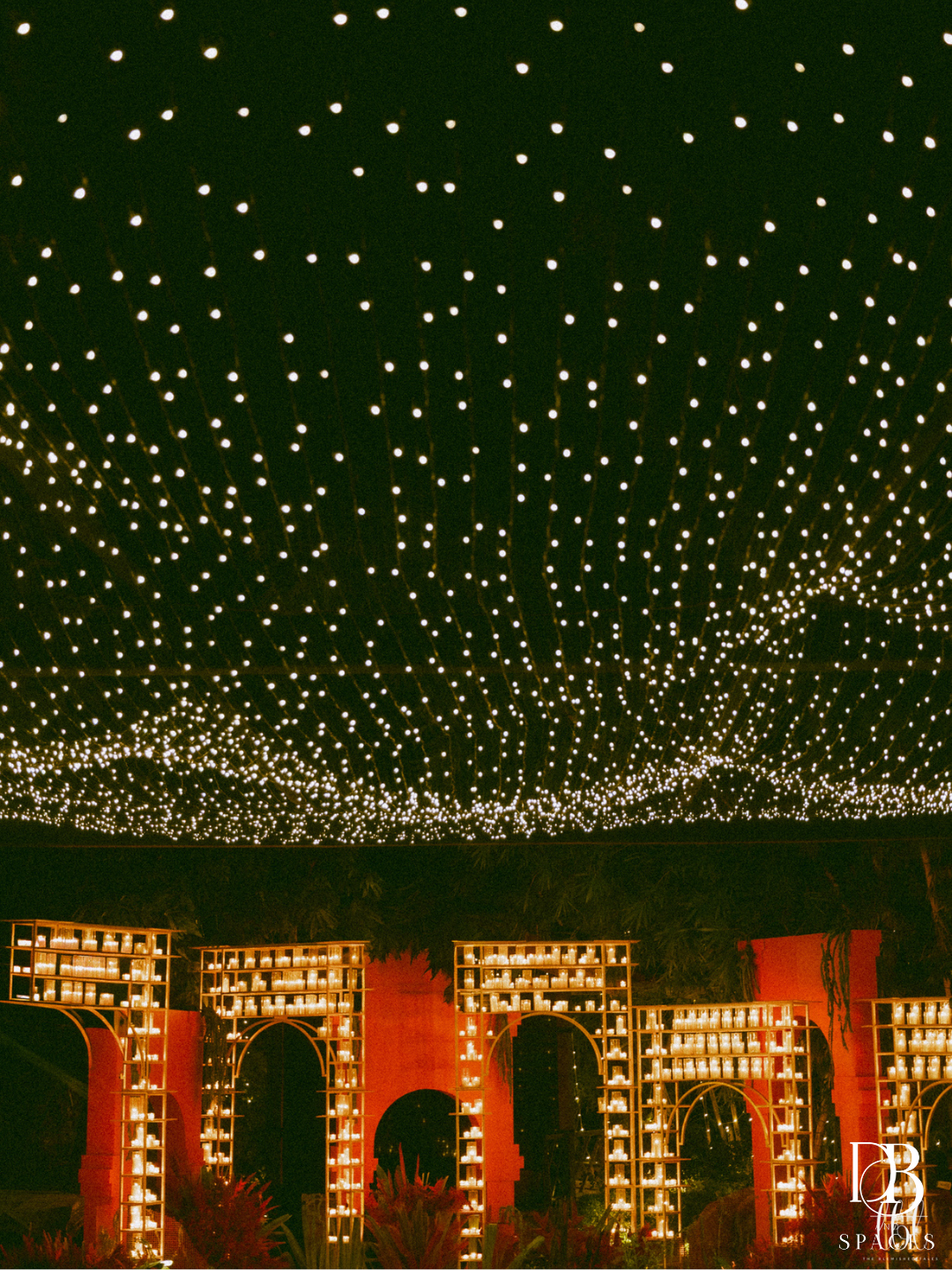
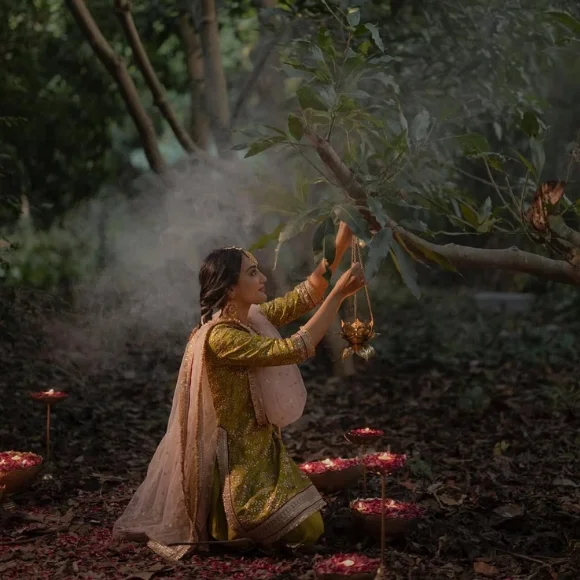
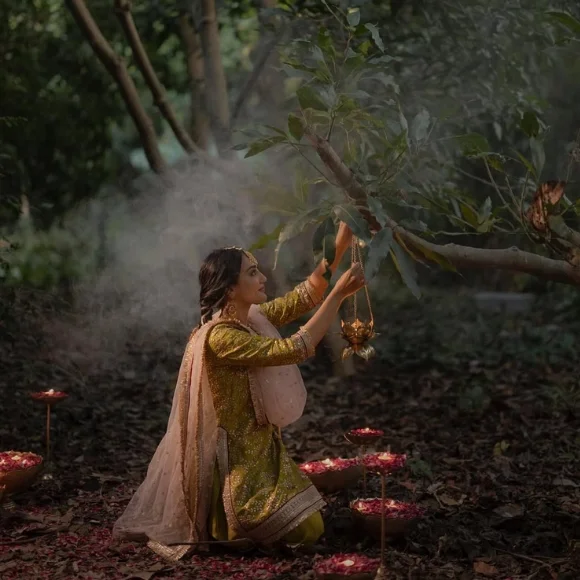
A brass diya is traditional. A hundred brass diyas arranged in a geometric grid on a clean white surface is contemporary. The object hasn’t changed. The context has.
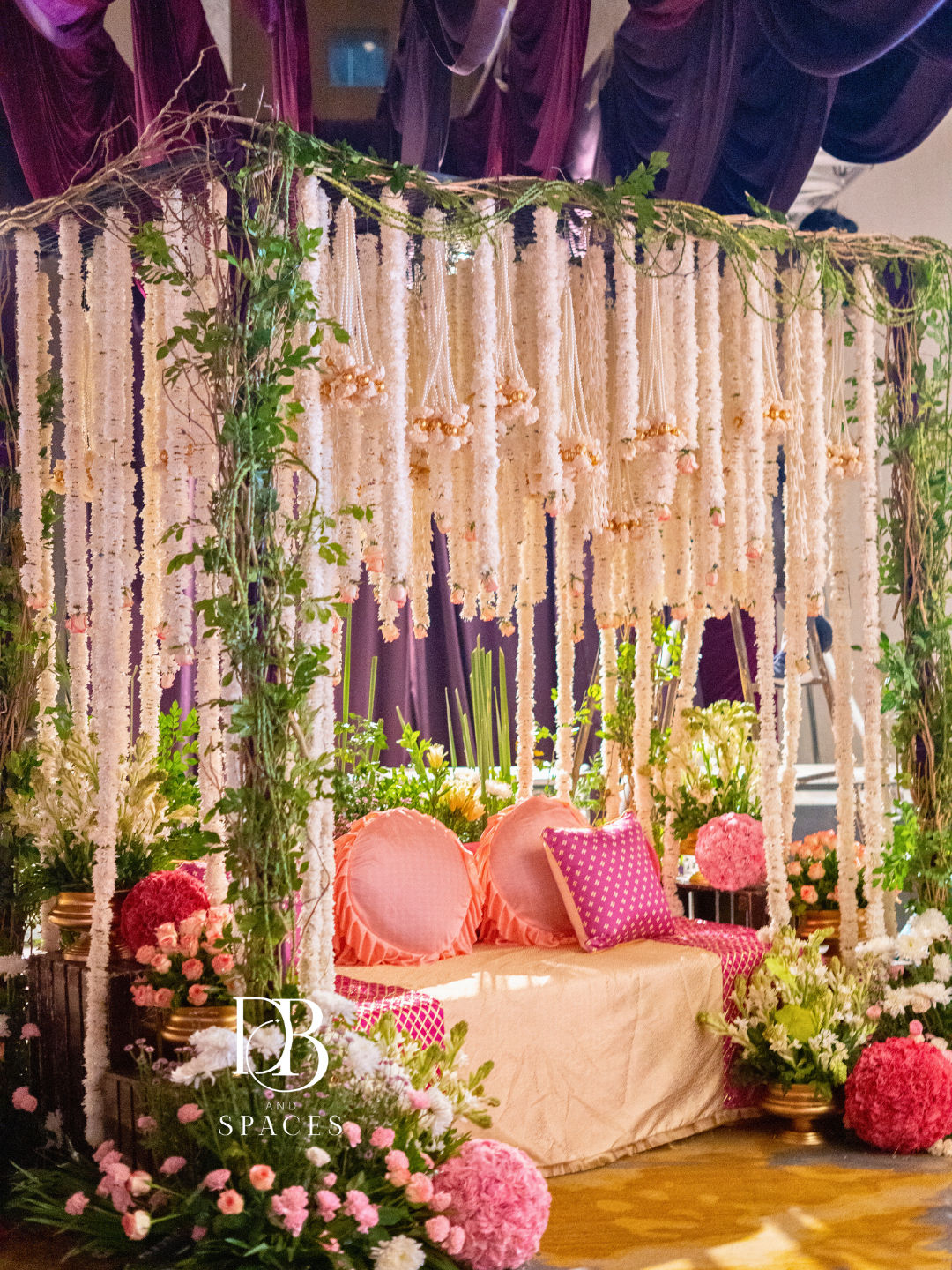
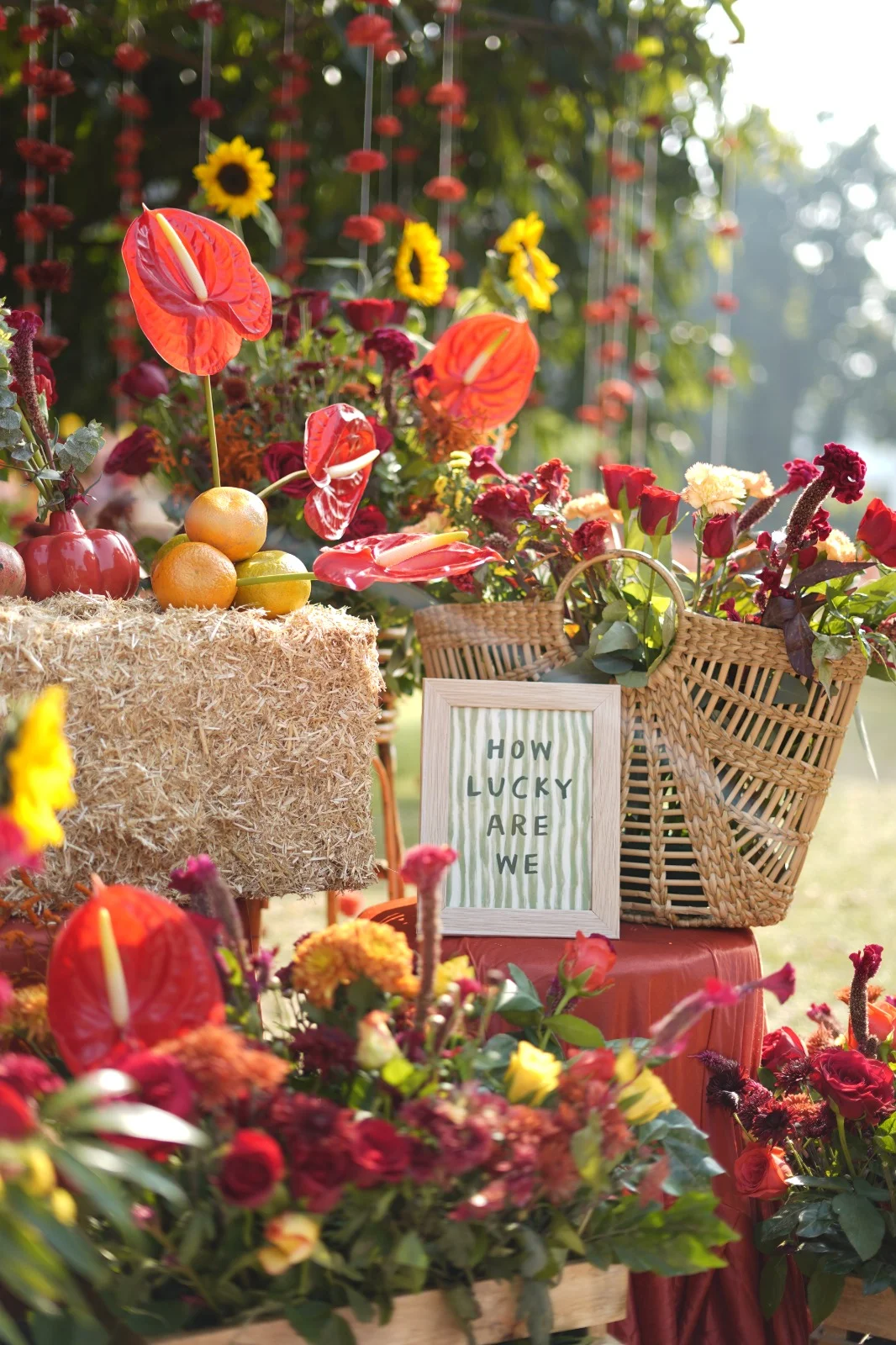
Marigold strings hanging from a doorway is traditional. Marigold strings hanging from a sleek metal frame in a single dramatic curtain against a bare wall is contemporary. Same flower. Completely different energy.
A kolam or rangoli on the floor of the entrance is traditional. A kolam pattern laser-cut into a metal panel and backlit with warm LEDs is contemporary. Same art form. Different medium.
You don’t need to replace traditional elements with modern ones. You need to present traditional elements in a modern way. The warmth stays. The visual language updates.
Traditional Indian wedding palettes are bold. Reds, golds, oranges, deep greens. These colours carry meaning. They carry memory. They carry generations of association with celebration and auspiciousness.
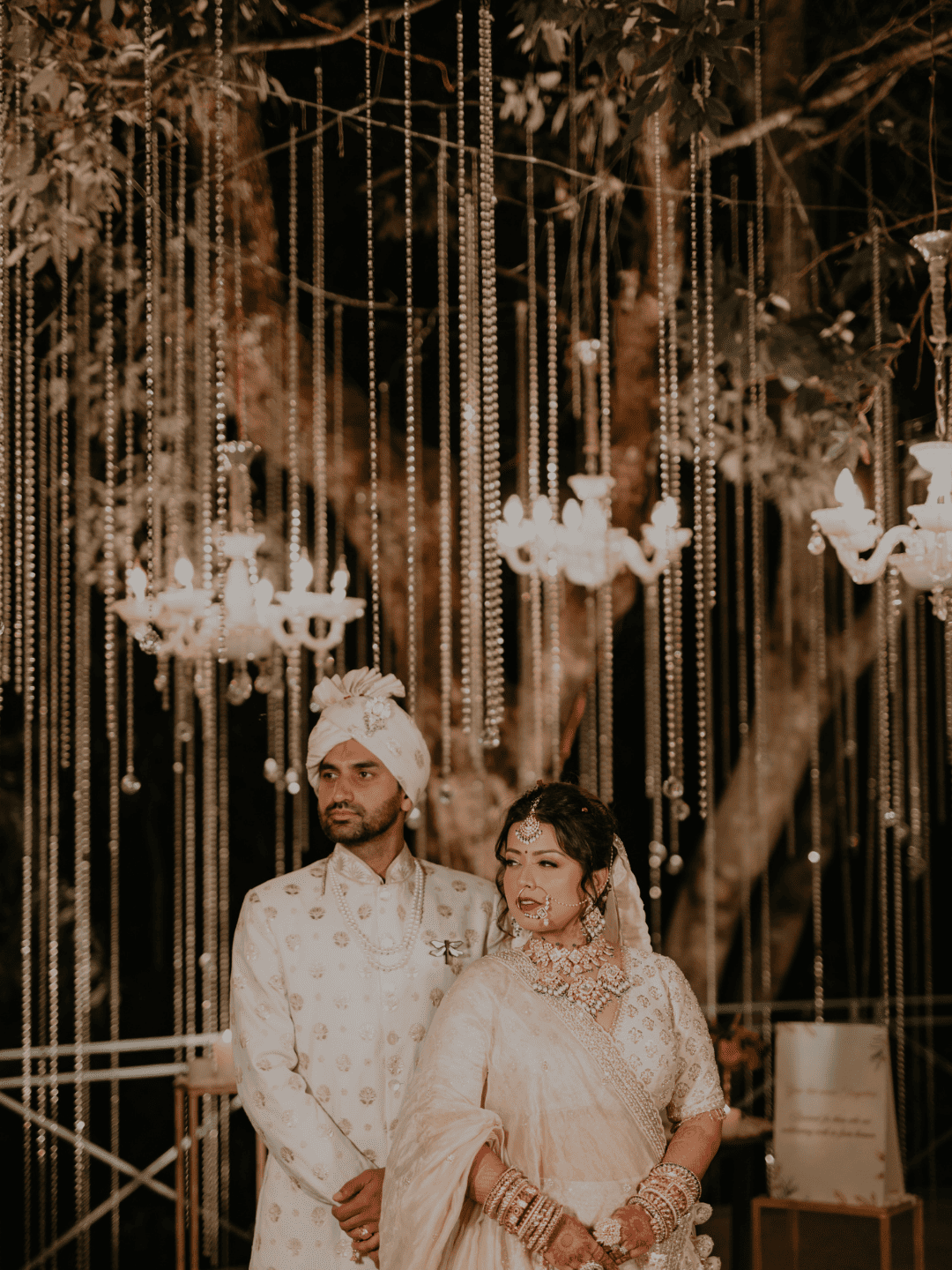
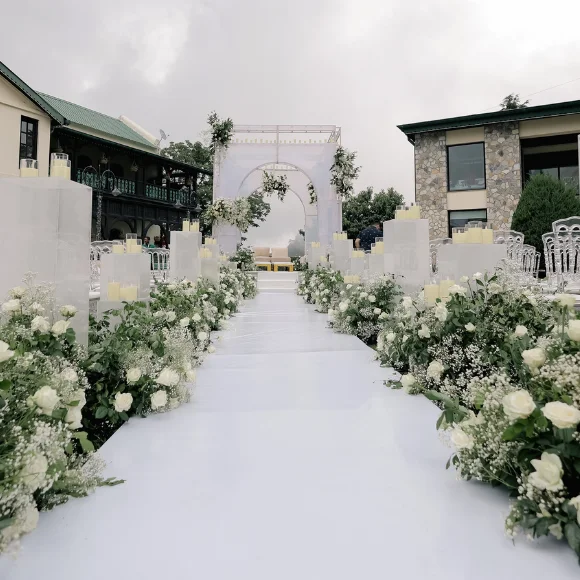
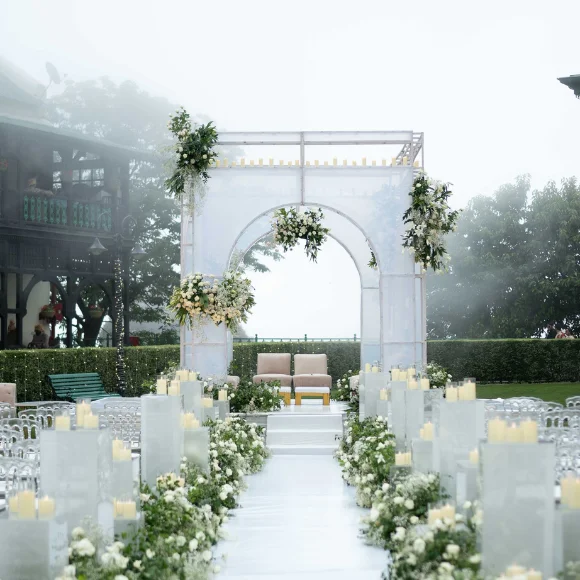
Contemporary palettes lean towards restraint. Whites, creams, sage greens, dusty pinks, muted metallics. They feel clean and editorial. They photograph beautifully.
The mistake is choosing one palette and abandoning the other entirely. An all-white Indian wedding can feel cold and disconnected from its own culture. An all-red wedding can feel heavy and outdated to a couple that doesn’t connect with that aesthetic.
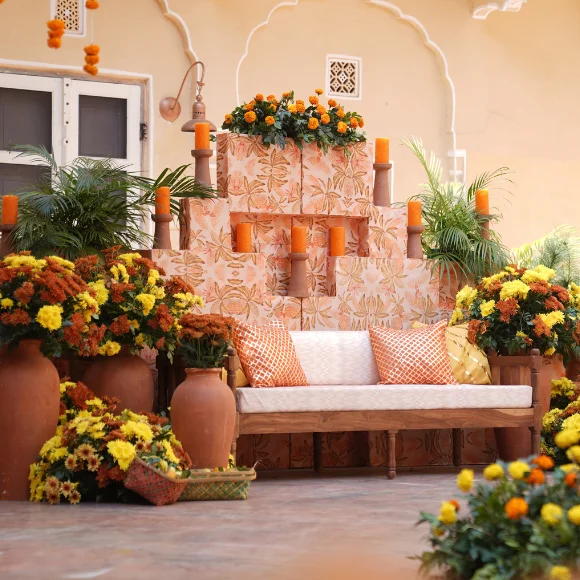
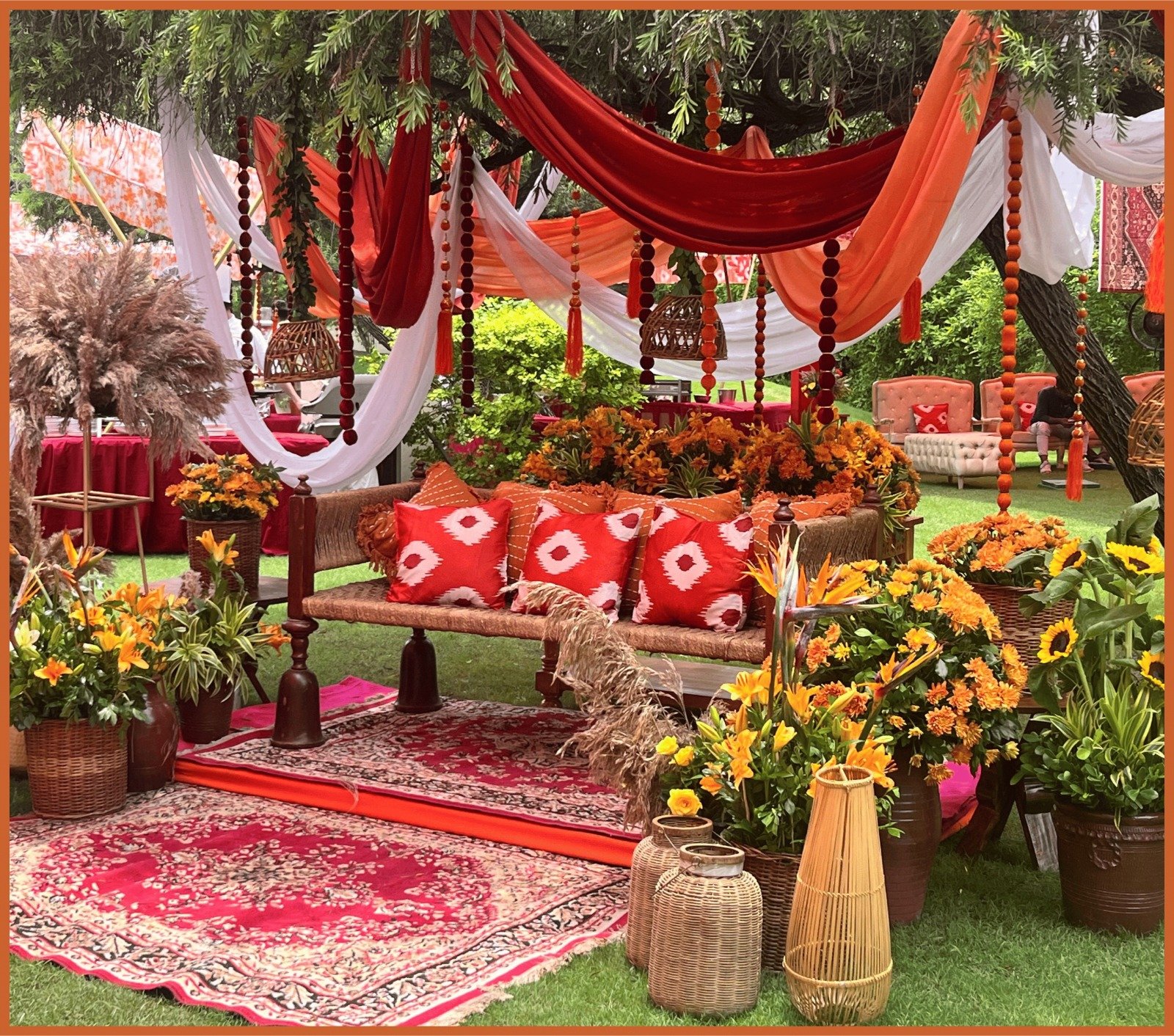
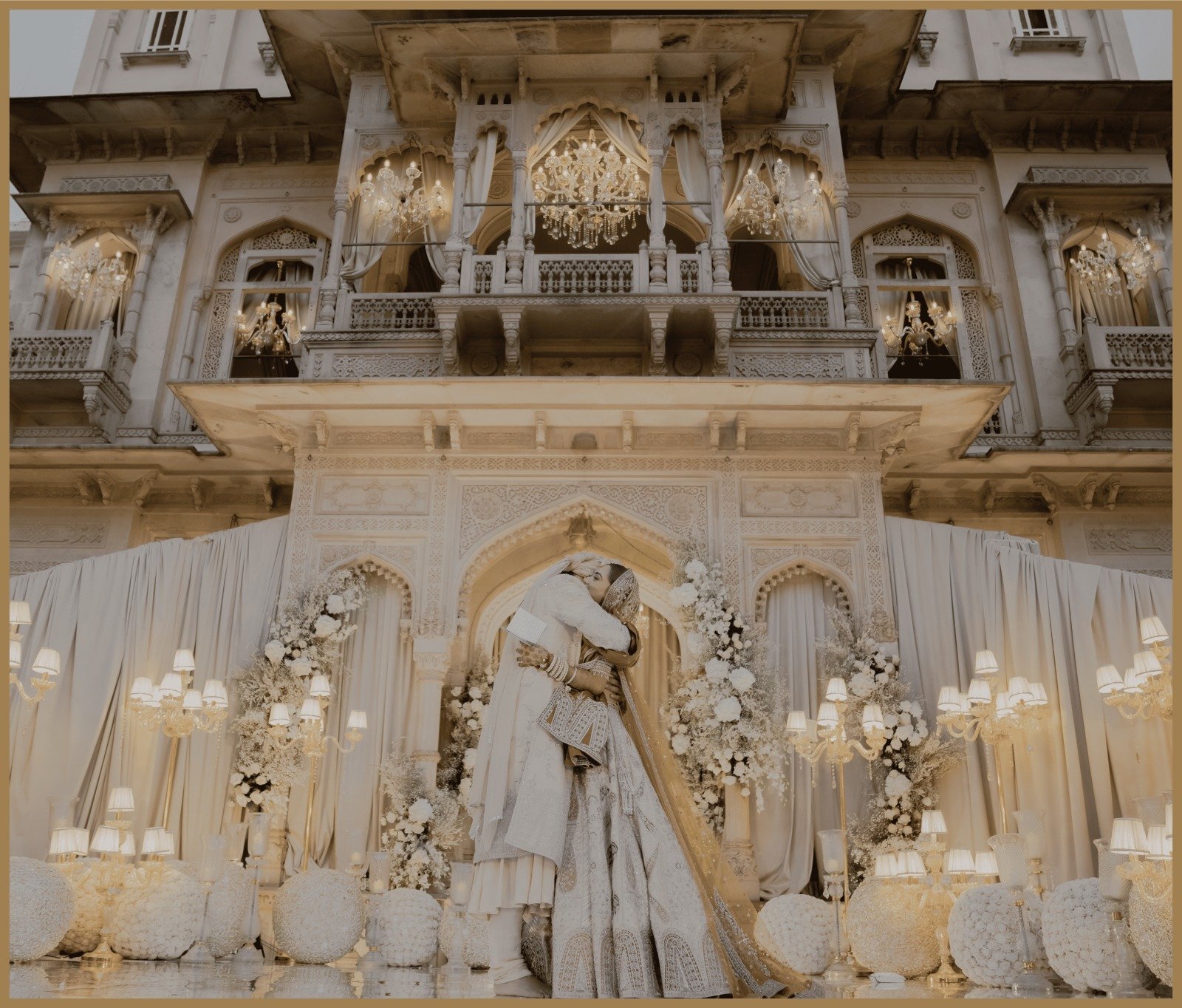
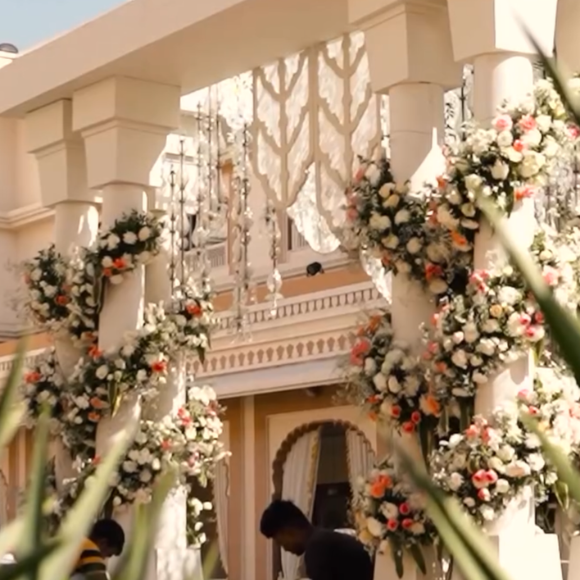
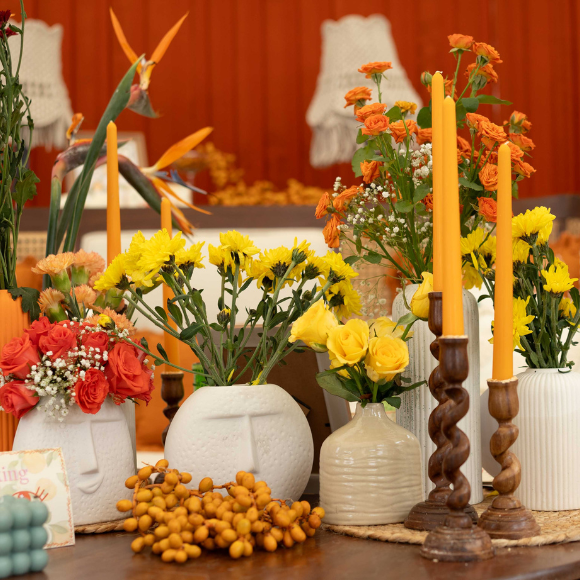
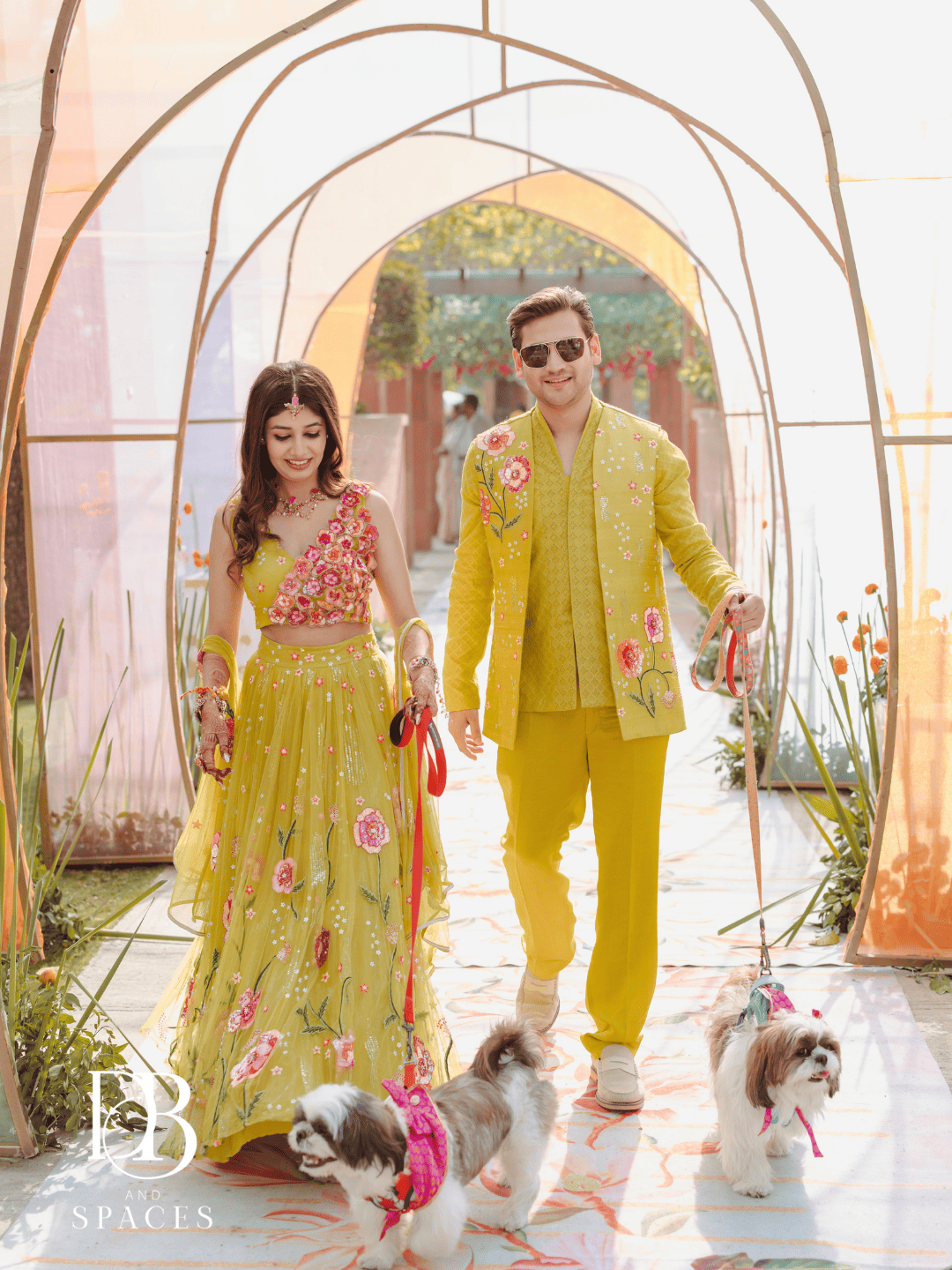
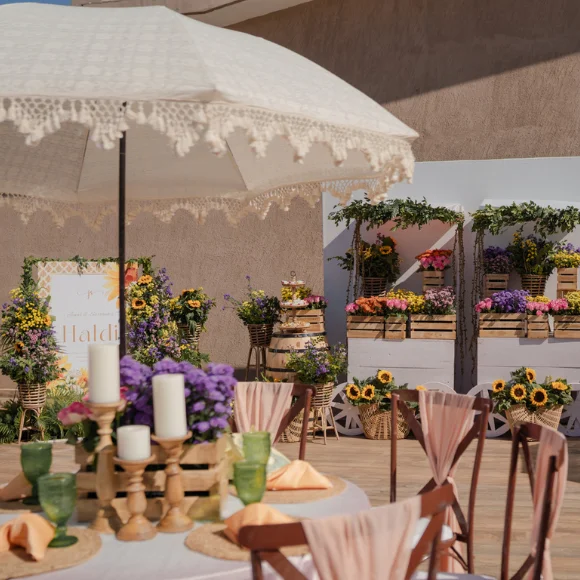
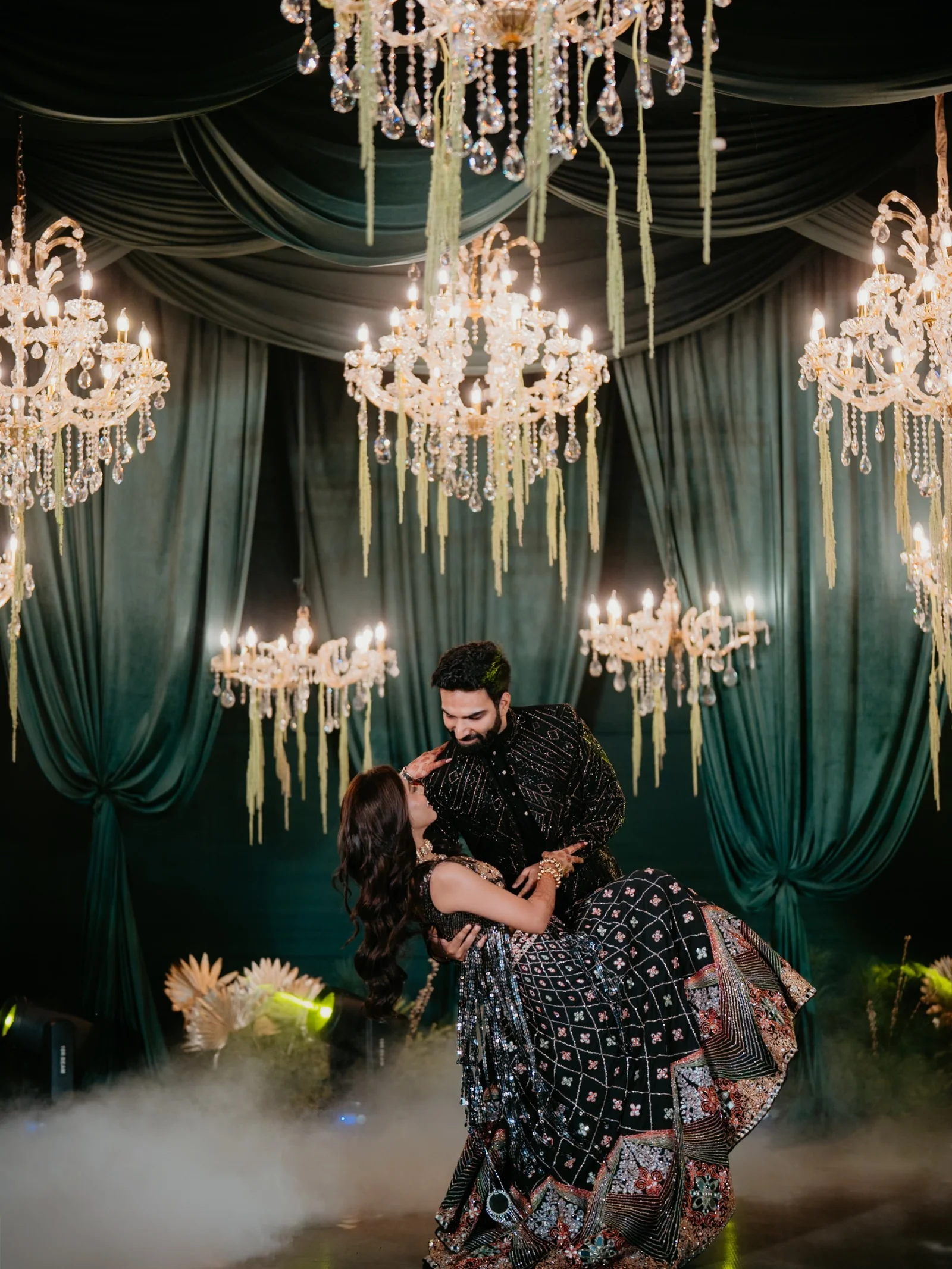
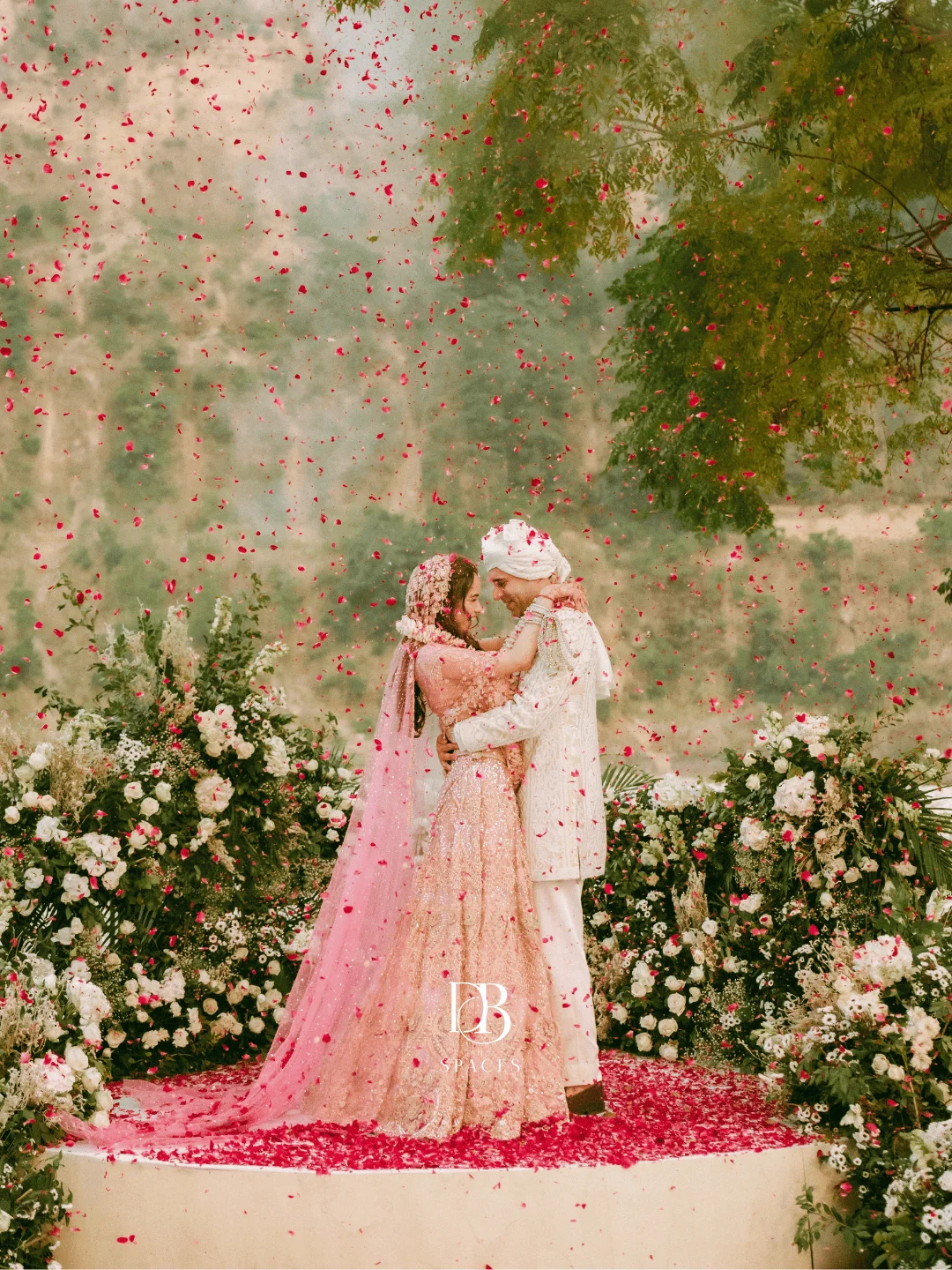
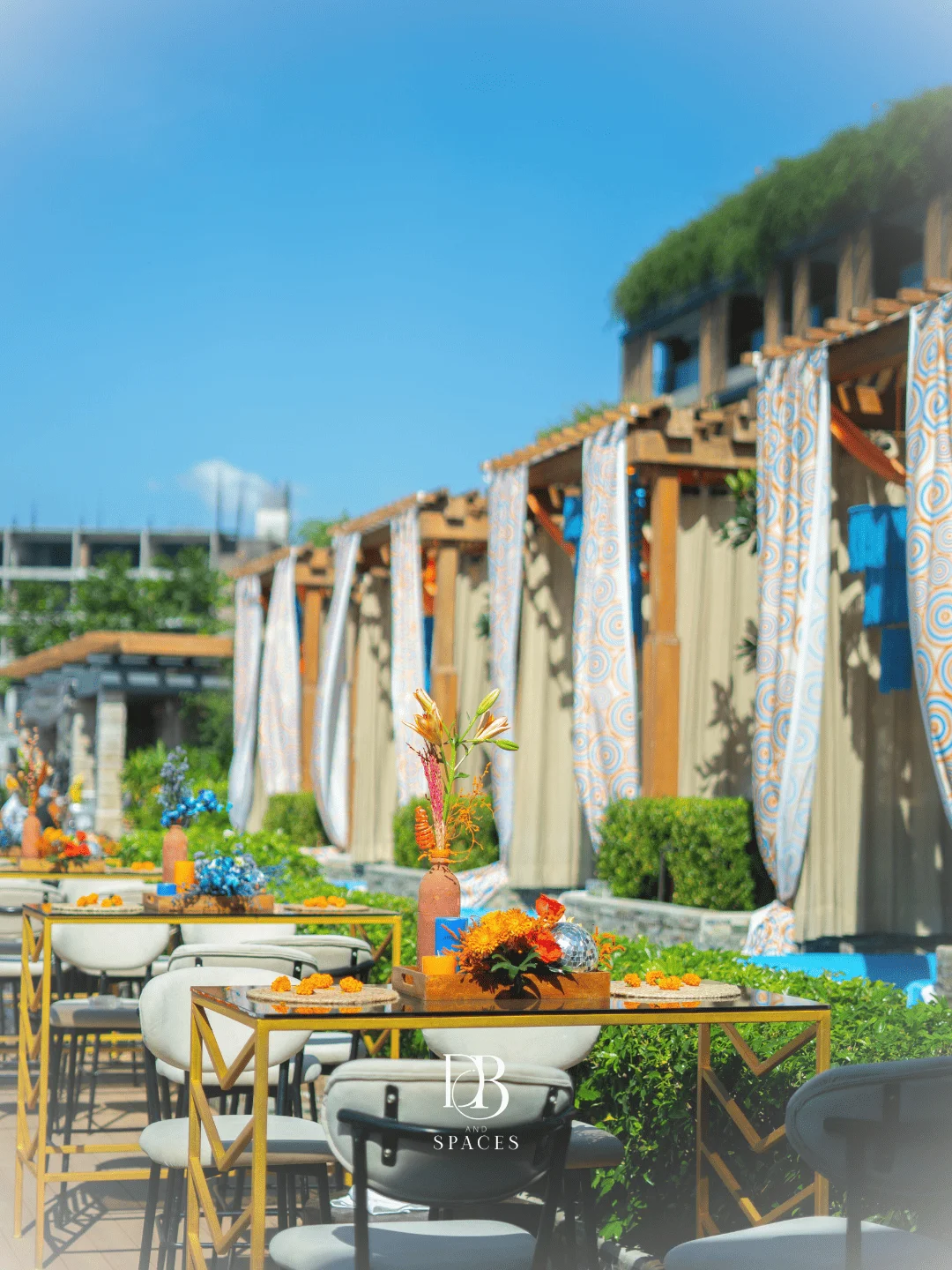
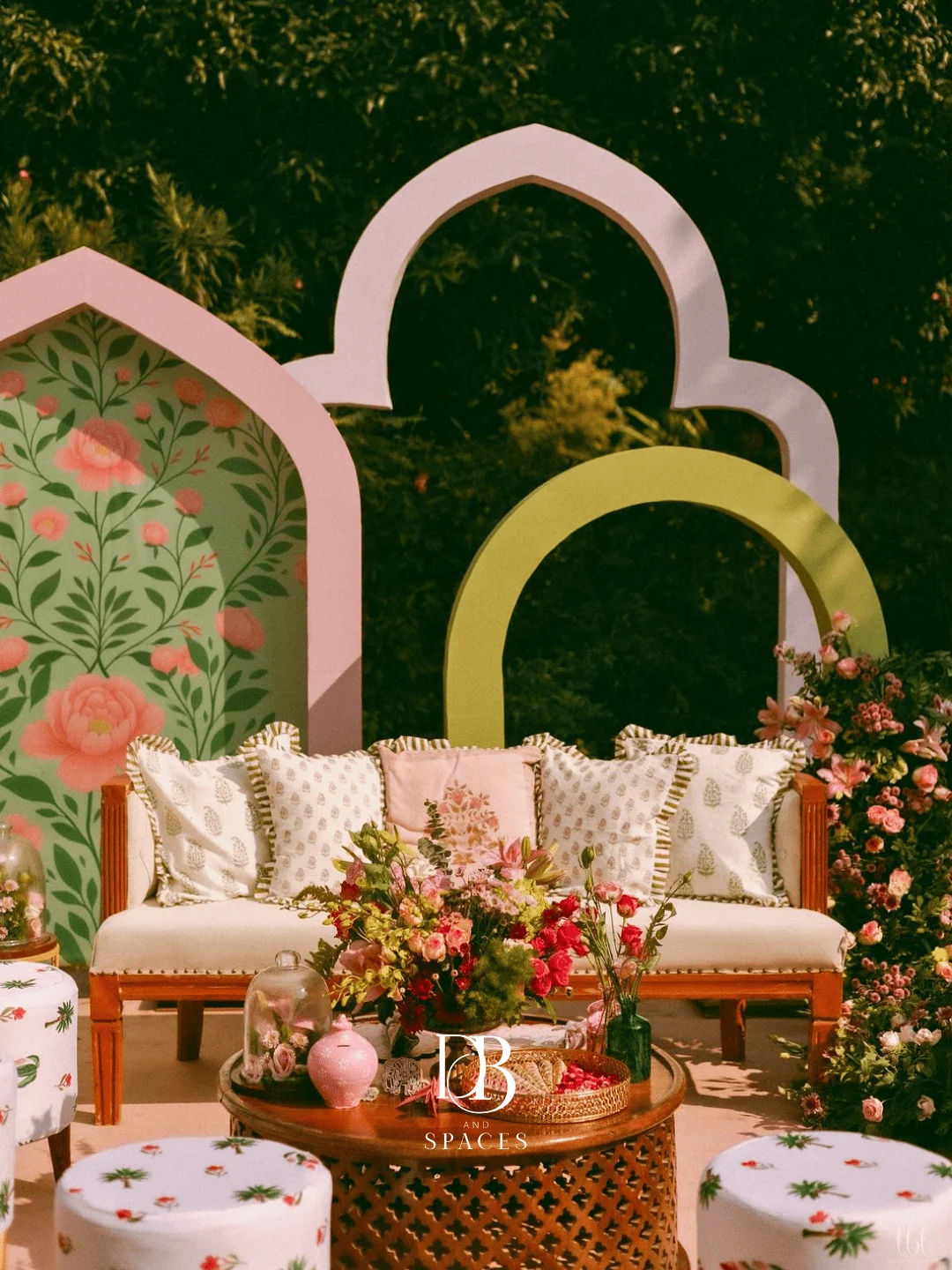
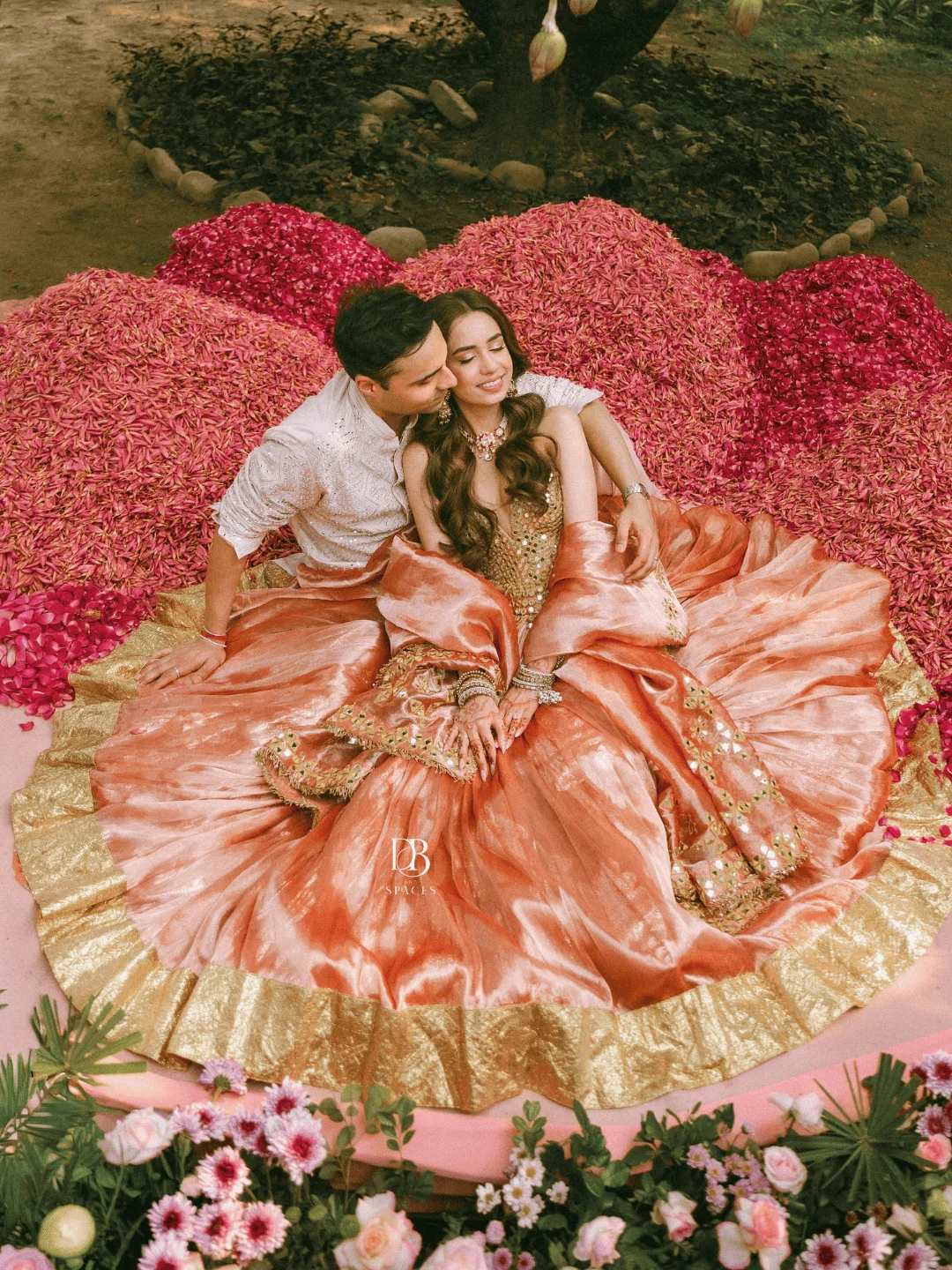
The solution is layering. Use a contemporary base palette of soft neutrals, and then bring the traditional colours in as accents. A sea of white and green with bursts of deep red at the mandap. A muted gold tablecloth with bright marigold centrepieces. Blush pink drapes with traditional brass urlis floating orange genda flowers.
The traditional colour doesn’t dominate. It punctuates. And that punctuation is what gives the space its soul.
The fastest way to make a space feel like a blend of old and new is to mix your materials with intention.
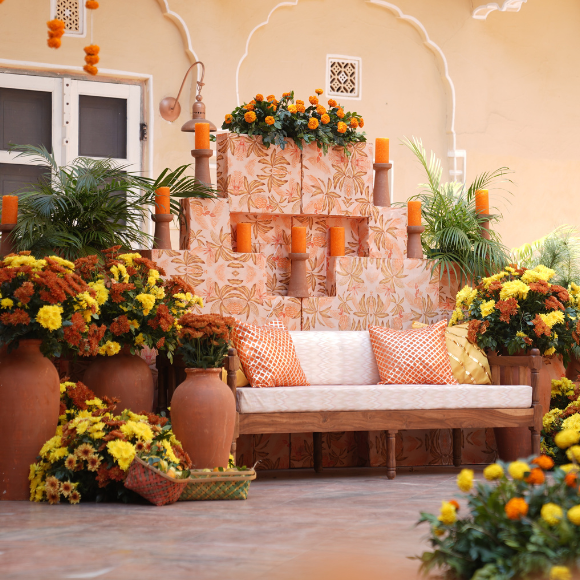
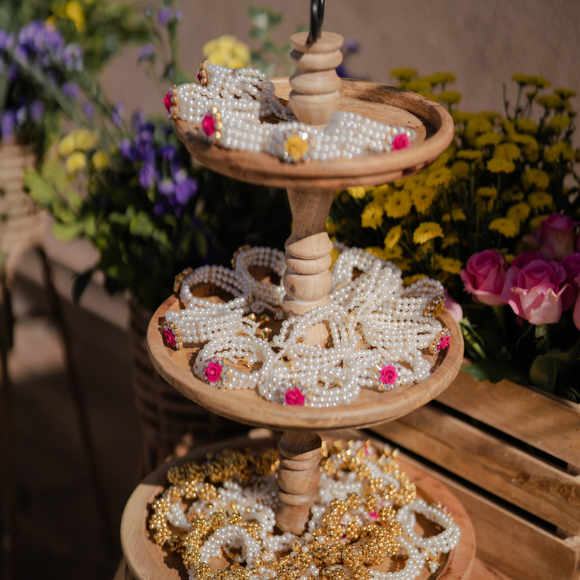
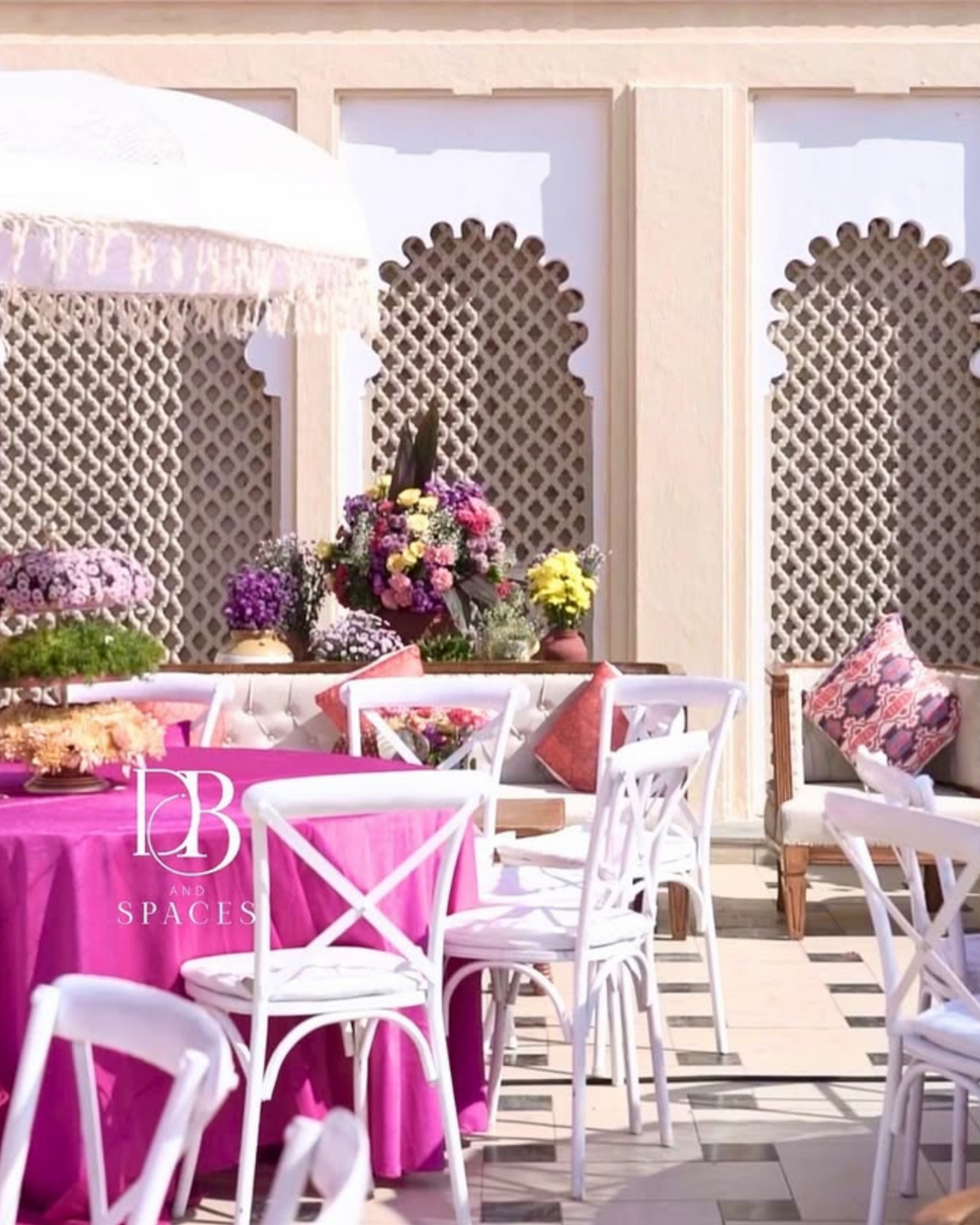
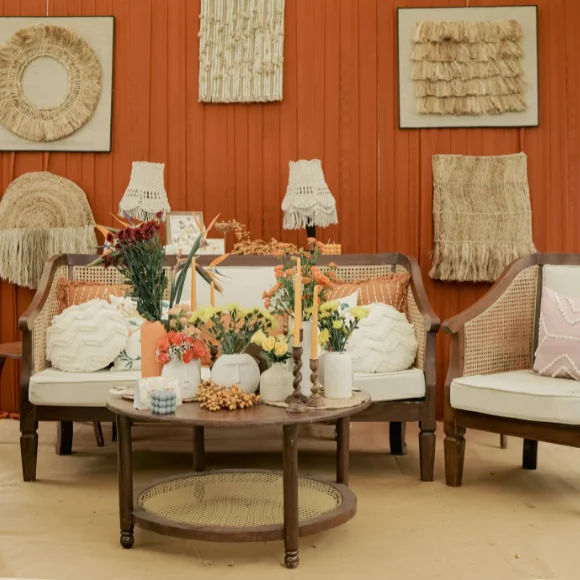
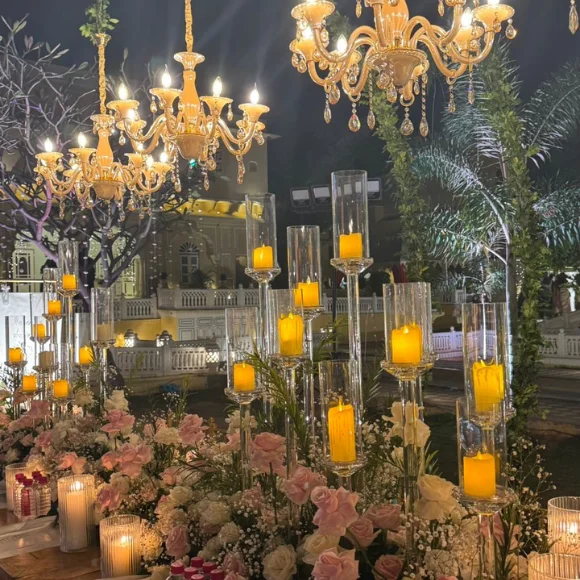
Pair raw brass with polished acrylic. Place a traditional carved wooden panel next to a smooth concrete wall. Set a silver urli on a modern marble pedestal. Hang a cluster of clay diyas from a minimalist metal frame. Use hand-block-printed fabric as a table runner on a sleek glass table.
Each pairing creates a quiet tension between the handmade and the machine-made, the warm and the cool, the inherited and the chosen. That tension is what makes fusion design feel alive rather than confused.
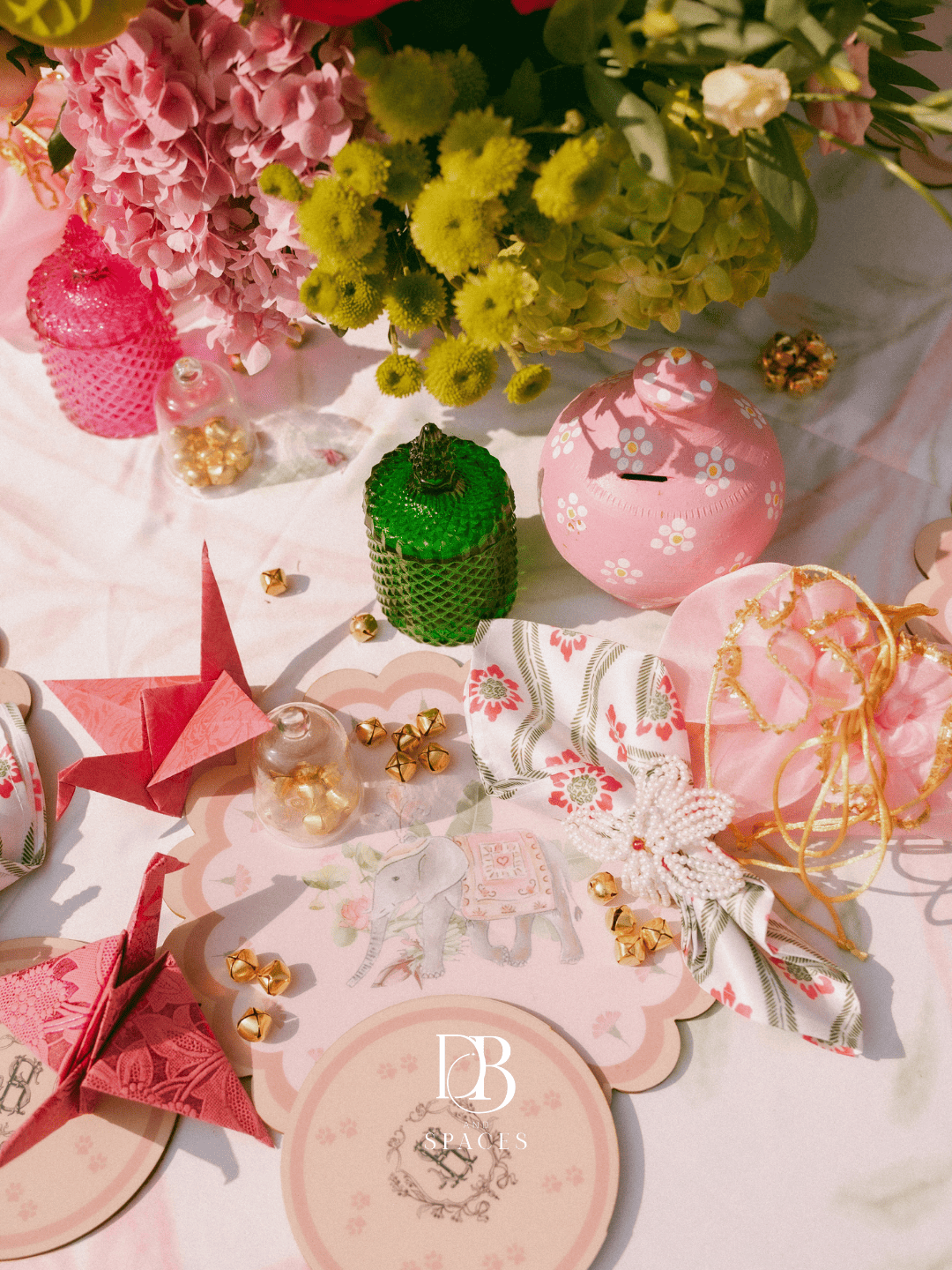
One rule we follow at DB and Spaces is that every vignette should have at least one element from each world. If a corner feels entirely modern, add a brass lamp. If a table feels entirely traditional, swap out the gold charger plate for a matte black one. The mix should be present everywhere, not concentrated in one show piece.
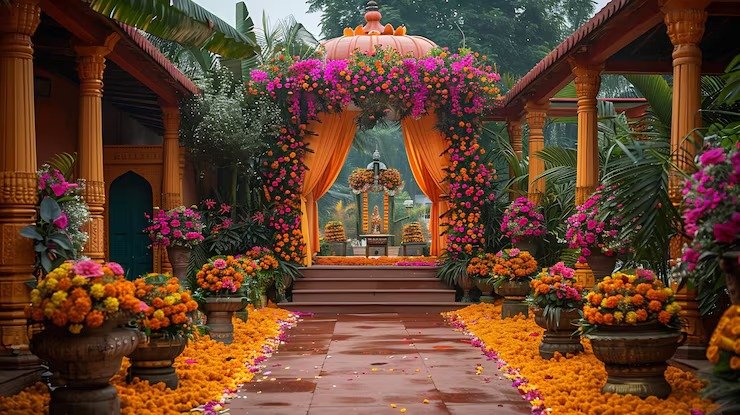
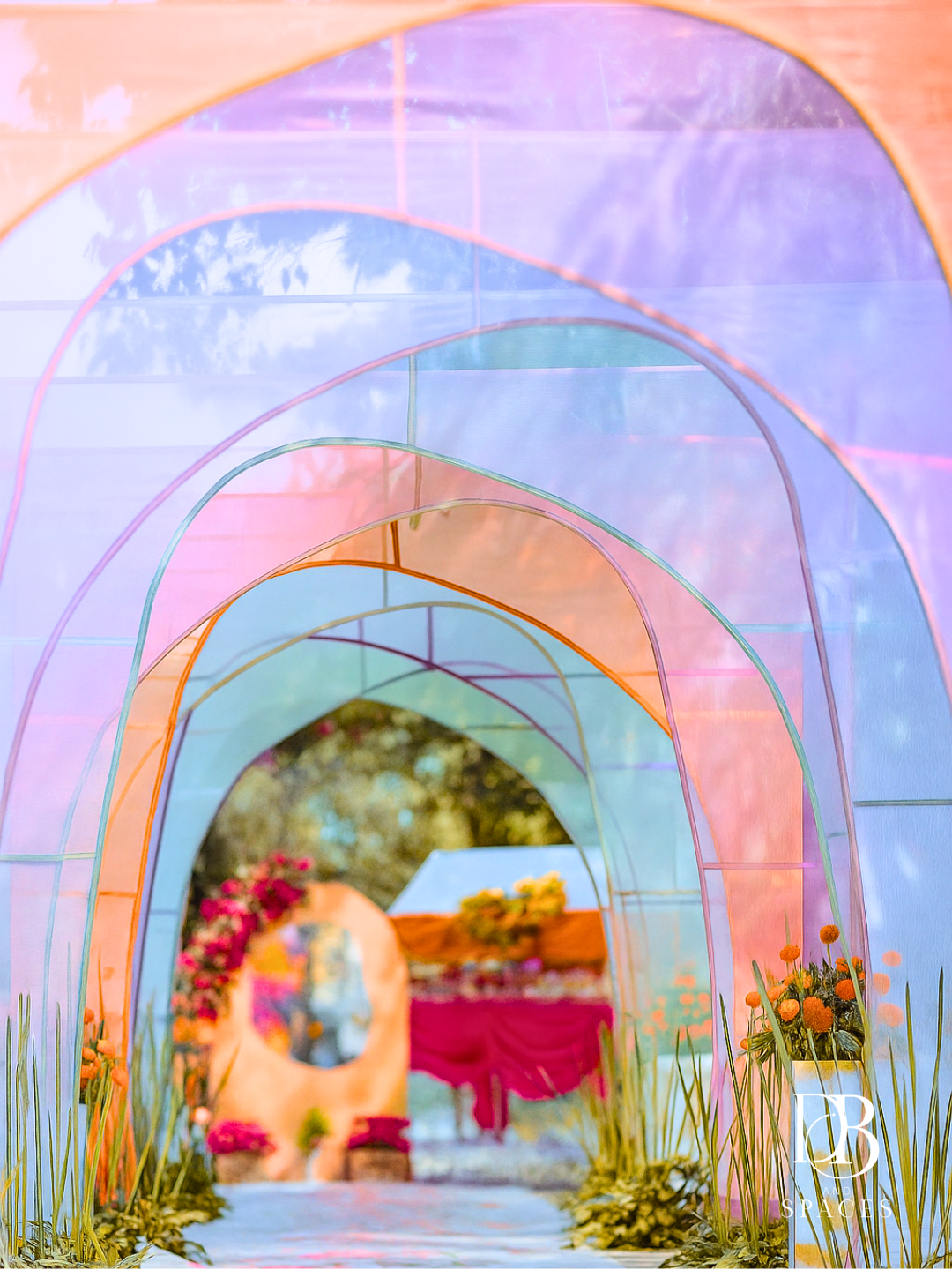
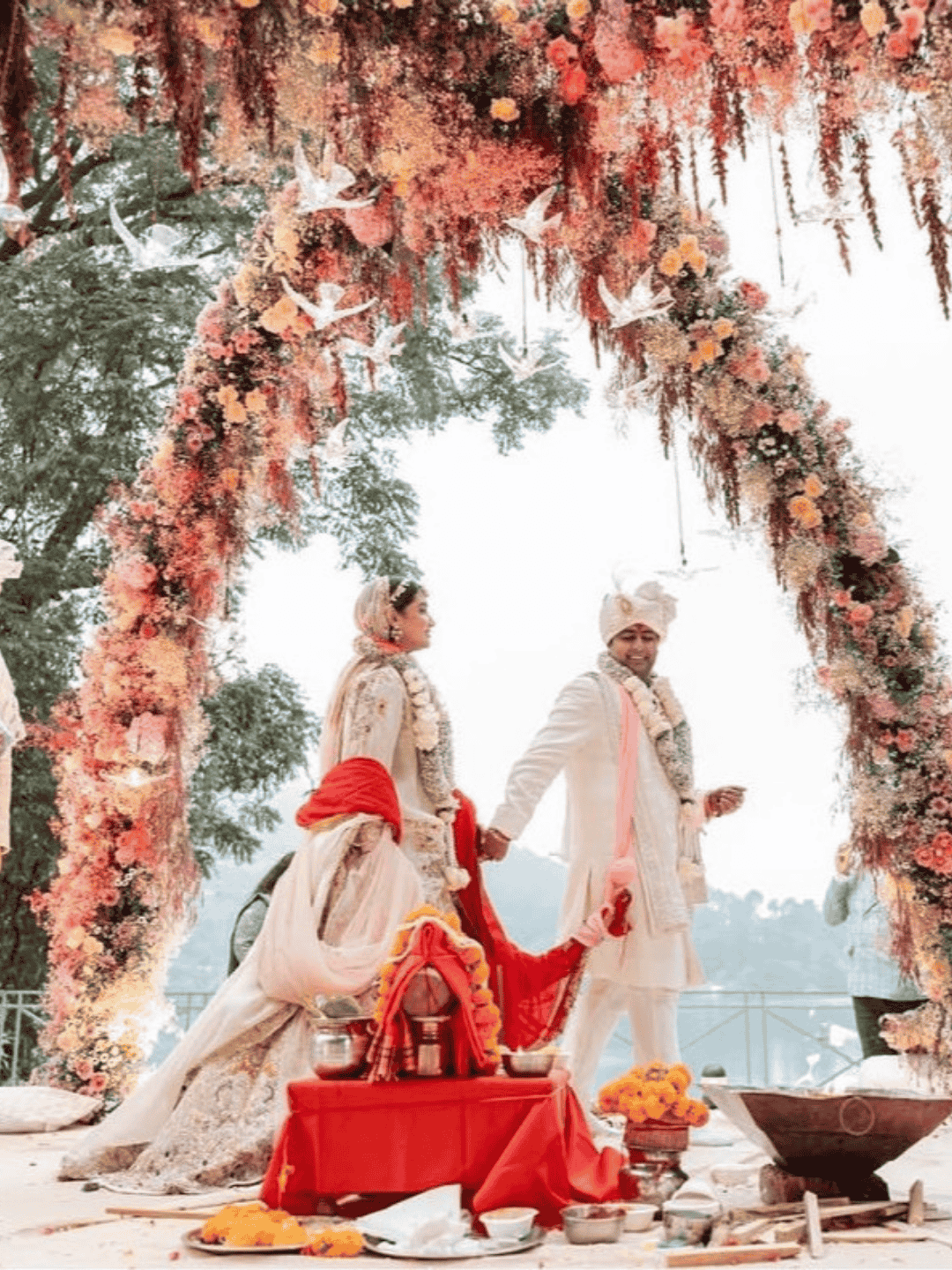
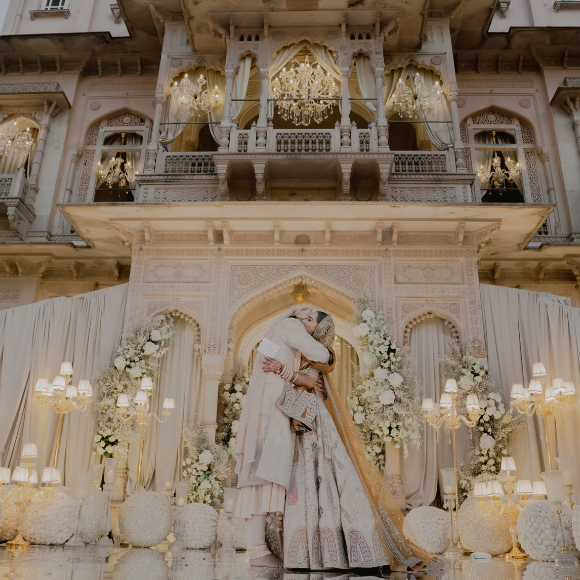
If there’s one structure that represents this fusion challenge most visually, it’s the mandap. It’s the most photographed element of the wedding. It’s the most emotionally significant. And it’s the one where traditional expectations are strongest.
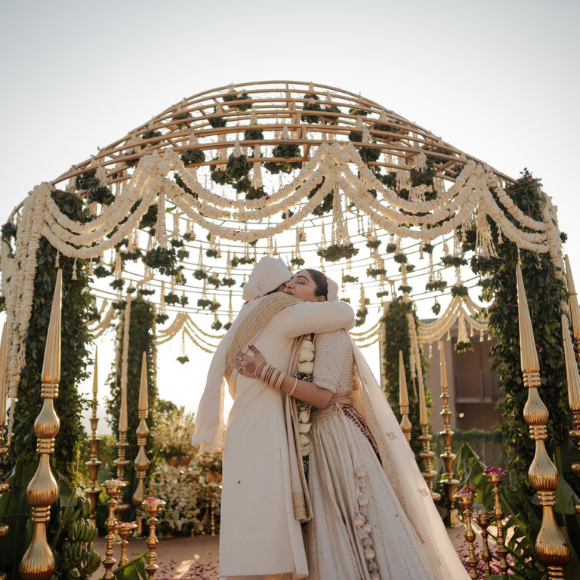
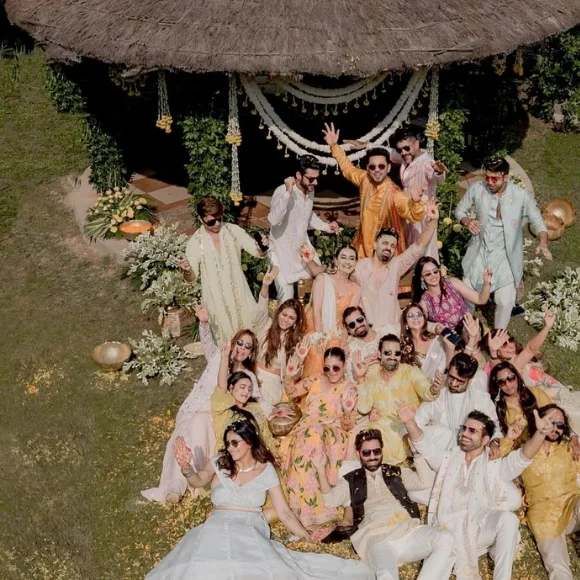
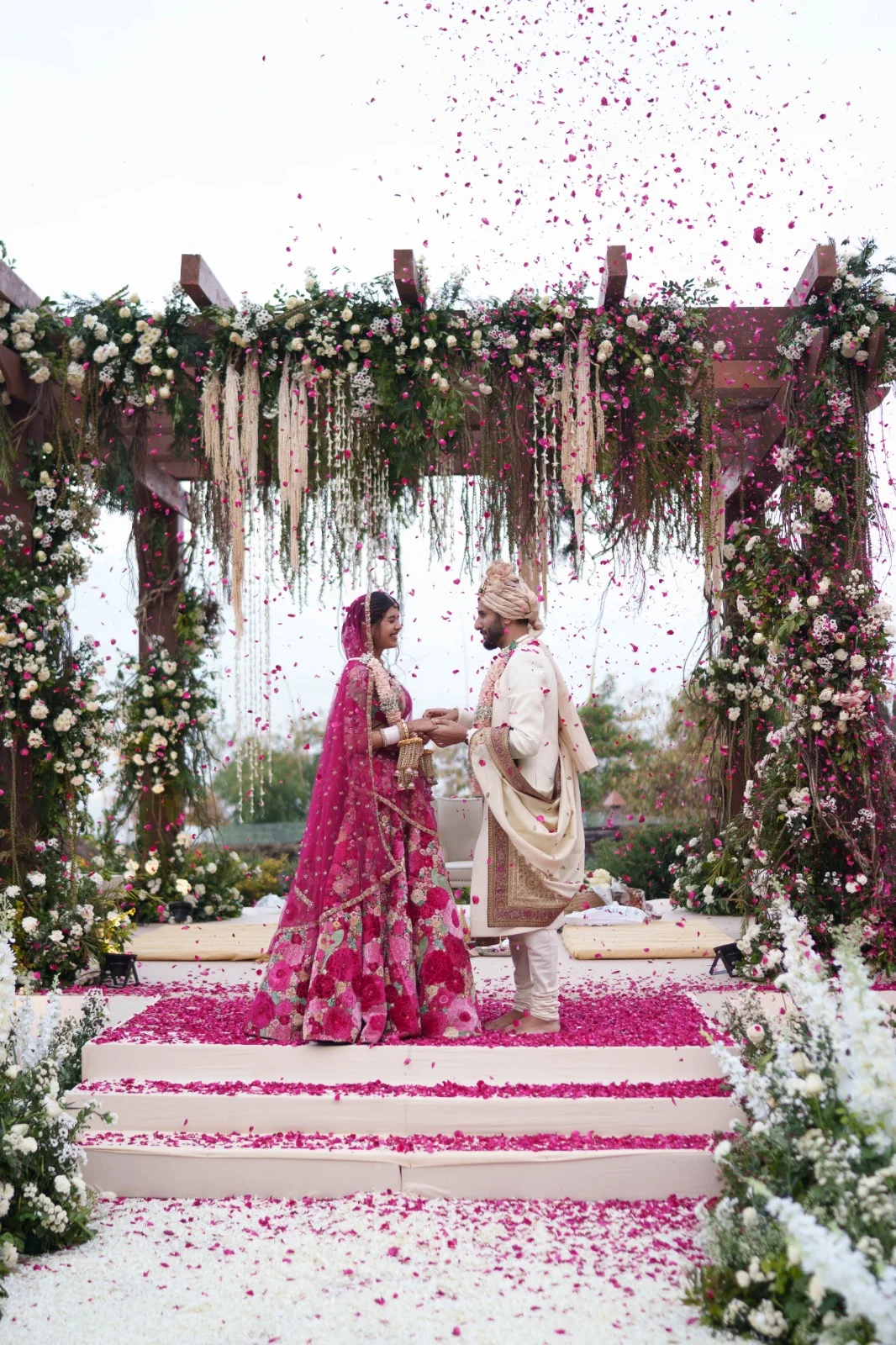
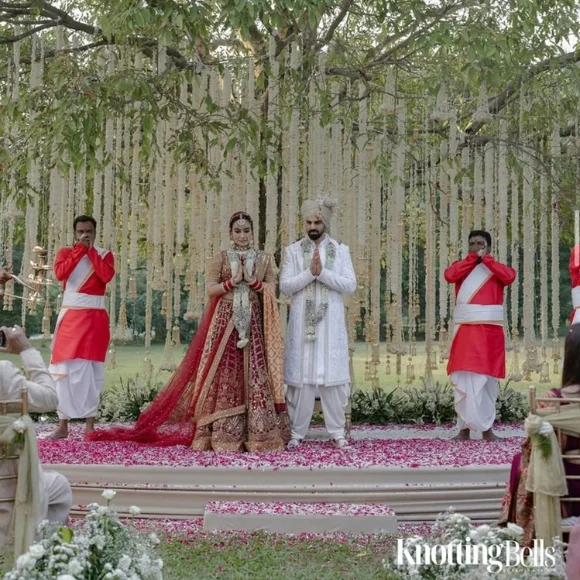
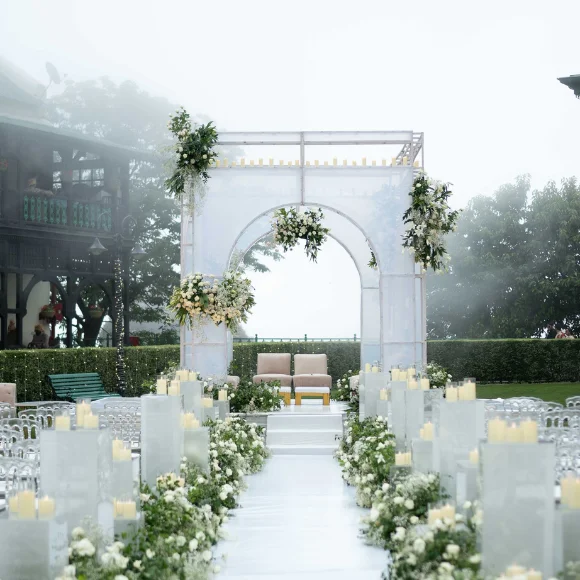
Our approach is to keep the mandap structurally modern and texturally traditional. Clean geometric lines for the frame. Minimal pillars. An open, airy shape that doesn’t block sightlines. And then layer it with traditional elements. Draped marigold garlands from the crossbeam. A brass kalash at each corner. A rich silk fabric panel behind the fire. Fresh banana leaves tied to the pillars.
The bones are contemporary. The skin is traditional. And from the guest’s seat, it looks like something they’ve never quite seen before, but somehow already recognise.
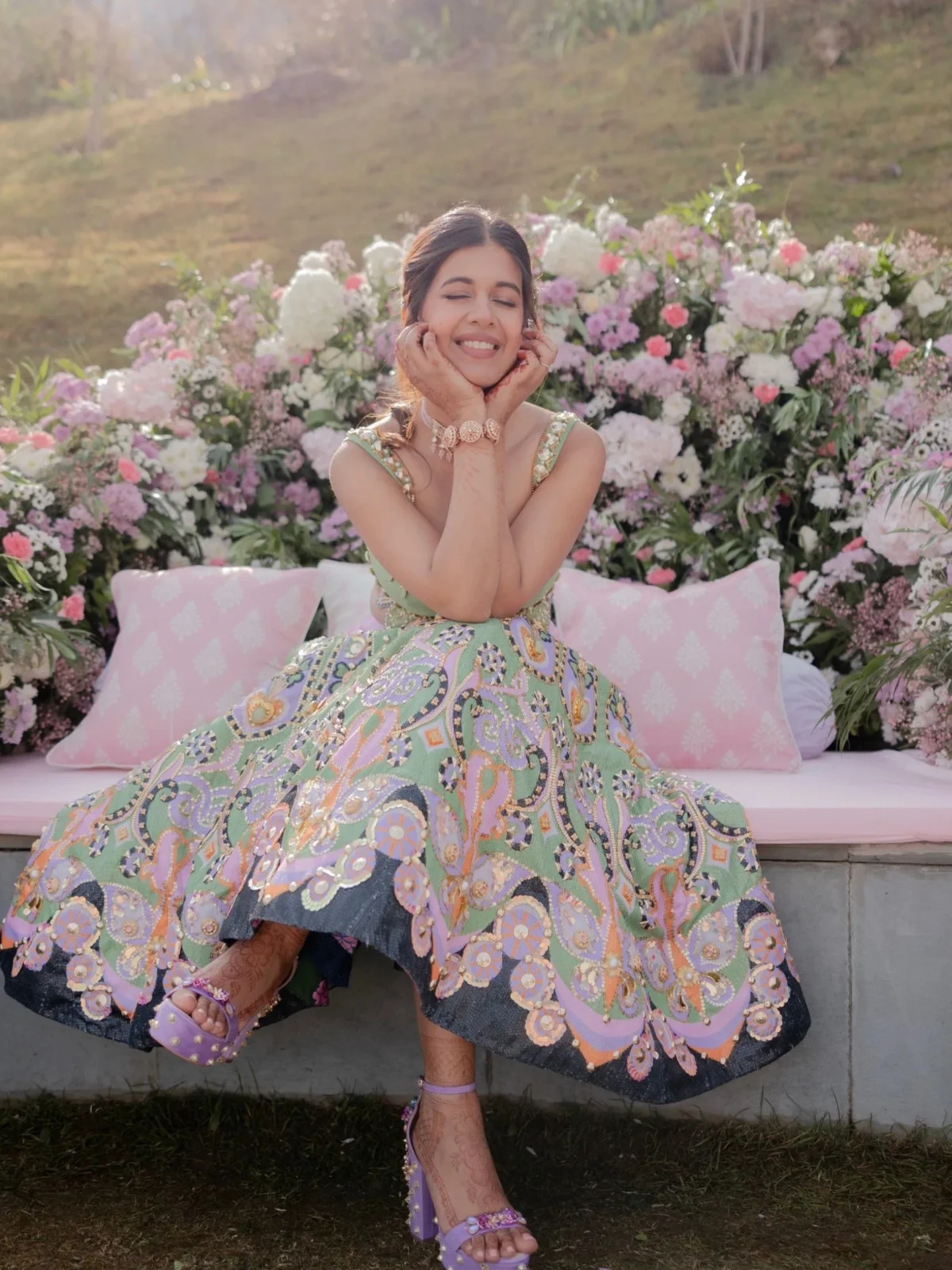
Swap heavy gilded chairs for clean-lined wooden ones and drape them with a traditional textile. Use floor seating with bolster cushions for the mehendi but arrange them in a modern lounge layout rather than traditional rows. Replace the conventional stage sofa with a sleek bench backed by a single dramatic floral installation.
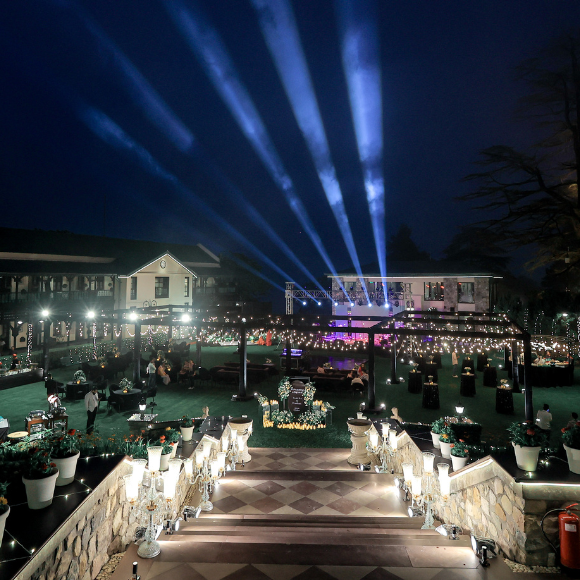
These small choices add up. By the time a guest walks through the entire venue, they’ve experienced a space that feels both culturally rooted and visually fresh without being able to point to exactly why.
Mixing traditional and contemporary is not a formula. It’s a feeling. And it’s a feeling that takes time to develop, test, and refine. Mood boards help. Venue walkthroughs help. Mock setups help even more.
But mostly, it takes a design team that genuinely understands both languages. One that respects the weight of tradition and the pull of the new in equal measure.
At DB and Spaces, that’s what we do best. We sit between two worlds and build something that belongs in both.
If you’re a couple caught between “I want it modern” and “but I also want it to feel like home,” come talk to us. That’s our favourite place to start.
DB and Spaces. Where tradition meets today.
Recent Post
Any Query? Reach Us
Follow our latest stories.


 (1).webp "https://dbandspaces.com/storage/blogs/1792063061-compressed_DB Spaces Blog Cover (Sept) (1).webp")